Work Smarter, Not Harder: The AI Shift
Apr 08, 2026
For years, we’ve been told that success comes from working harder, putting in longer hours, and doing more than everyone else. And for a long time, that approach worked.
But the rules are changing.
We’re entering a new era where effort alone is no longer the differentiator. The professionals who are advancing the fastest today are not necessarily the busiest — they are the most strategic. They understand how to leverage tools, systems, and now, artificial intelligence.
Welcome to the AI shift.

The End of “Busy Work” as a Competitive Advantage
In today’s world, many of the tasks that once consumed hours of our time can now be done in minutes.
Writing reports.
Summarizing meetings.
Conducting research.
Drafting emails.
Analyzing data.
Artificial intelligence has made it possible to automate or accelerate these tasks with remarkable efficiency.
This means something important:
Being busy is no longer the same as being valuable.
The value has shifted from doing tasks to thinking strategically about tasks.

What “Working Smarter” Actually Means Today
Working smarter is no longer just about time management. It’s about leverage.
It means asking:
- What can be automated?
- What can be delegated to AI?
- Where should my human thinking be applied?
Instead of spending hours gathering information, you use AI to generate insights quickly, and then apply your judgment to refine and act on them.
Instead of manually creating content, you use AI to draft, structure, and accelerate production, while you focus on messaging and positioning.
Instead of reacting to work, you begin to design systems that work for you.
The Rise of the AI-Augmented Professional
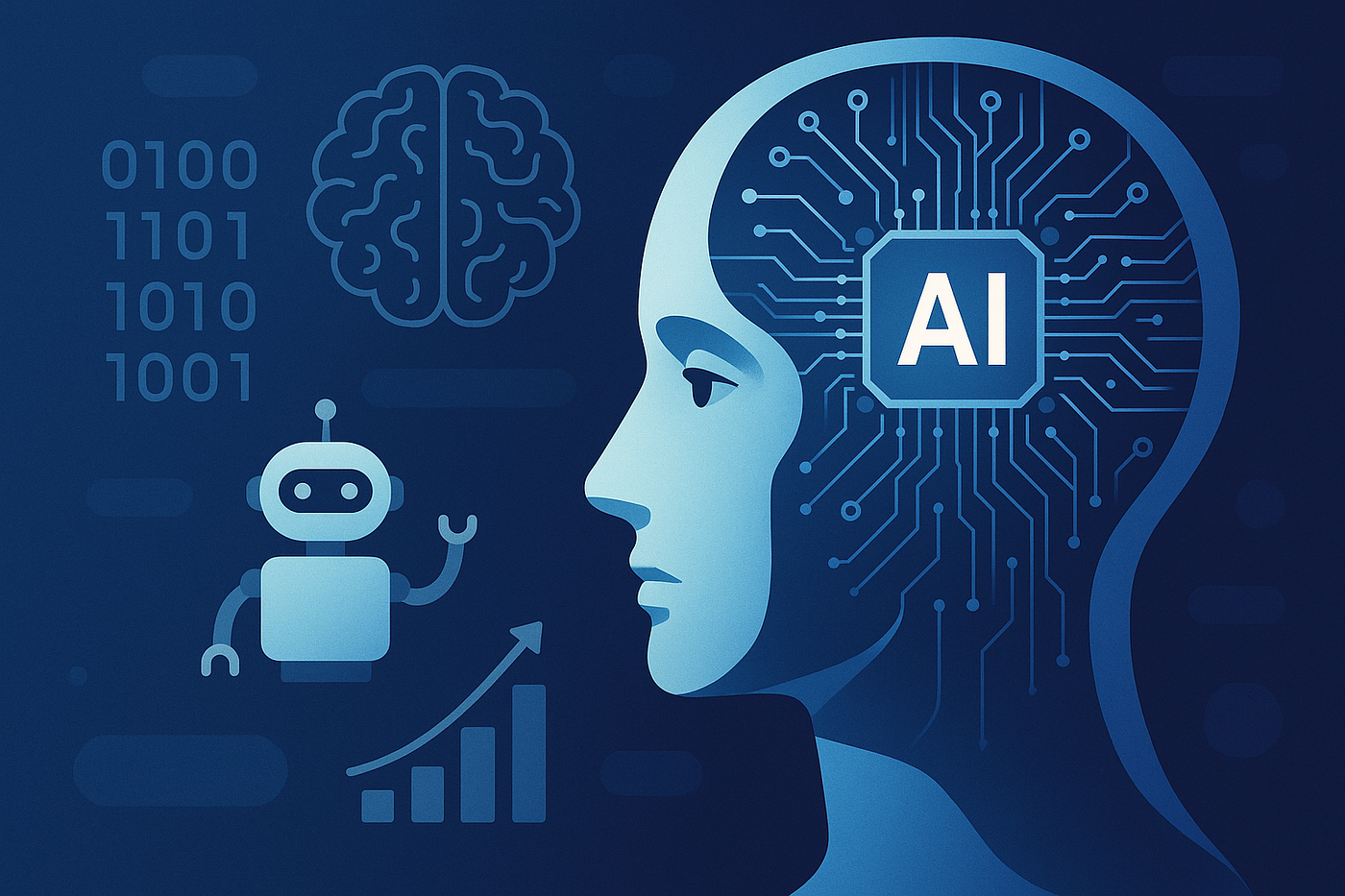
We are now seeing the emergence of a new type of professional: the AI-augmented professional.
This is someone who:
- Uses AI tools to increase productivity
- Focuses on high-impact thinking instead of repetitive tasks
- Delivers faster results without sacrificing quality
- Understands how to combine human insight with machine efficiency
These professionals are not being replaced by AI.
They are being amplified by it.
And as a result, they are becoming more valuable in the workplace.
How AI Is Transforming Everyday Work
Across industries, AI is quietly reshaping how work gets done.
In project management, AI tools are helping automate scheduling, generate reports, and predict risks before they occur.
In cybersecurity, AI is being used to detect threats faster, analyze patterns, and support decision-making in real time.
In content and marketing, AI is enabling faster creation, idea generation, and optimization.
In business operations, AI is streamlining workflows, reducing manual effort, and improving efficiency.
The pattern is clear:
AI is not replacing entire roles, it is transforming how those roles operate.
The Real Risk: Not Adapting
There is a common fear that AI will replace jobs.
But the more immediate risk is this:
Being outpaced by people who know how to use AI effectively.
Because when one person can do the work of three with the help of AI, expectations change.
Speed becomes the standard.
Efficiency becomes the baseline.
Adaptability becomes essential.
The gap is no longer between skilled and unskilled professionals,
it’s between those who leverage AI and those who don’t.

How to Start Working Smarter with AI
The shift doesn’t require you to become an AI expert overnight. It starts with simple, intentional steps:
1. Identify Repetitive Tasks
Look at your daily work and ask:
- What do I do repeatedly?
- What takes the most time?
These are your first opportunities for AI leverage.
2. Start Using AI Tools
Begin with tools that enhance productivity:
- Writing and summarization tools
- Research assistants
- Workflow automation platforms
The goal is not perfection, it’s familiarity.
3. Focus on High-Value Thinking
As AI handles more execution, your role shifts toward:
- Decision-making
- Strategy
- Problem-solving
- Communication
These are the areas where human value becomes even more important.
4. Build Systems, Not Just Effort
Instead of working harder each day, ask:
- How can I create a process that saves time tomorrow?
AI allows you to build systems that scale your output without increasing your workload.
The Future Belongs to Strategic Thinkers
The professionals who will thrive in this new era are not those who resist change, but those who learn how to adapt quickly and intelligently.
They understand that:
- AI is not a threat, but a tool
- Efficiency is the new advantage
- Strategy is more valuable than effort
They don’t just work harder.
They work smarter, faster, and more intentionally.
The shift is already happening.
The question is not whether AI will impact your career,
it’s whether you will position yourself to benefit from it.
Because in this new era, success doesn’t come from doing more.
It comes from knowing what to do, how to do it, and what to delegate to AI.
That is the real meaning of working smarter.
And those who embrace it early will define the future of work.